


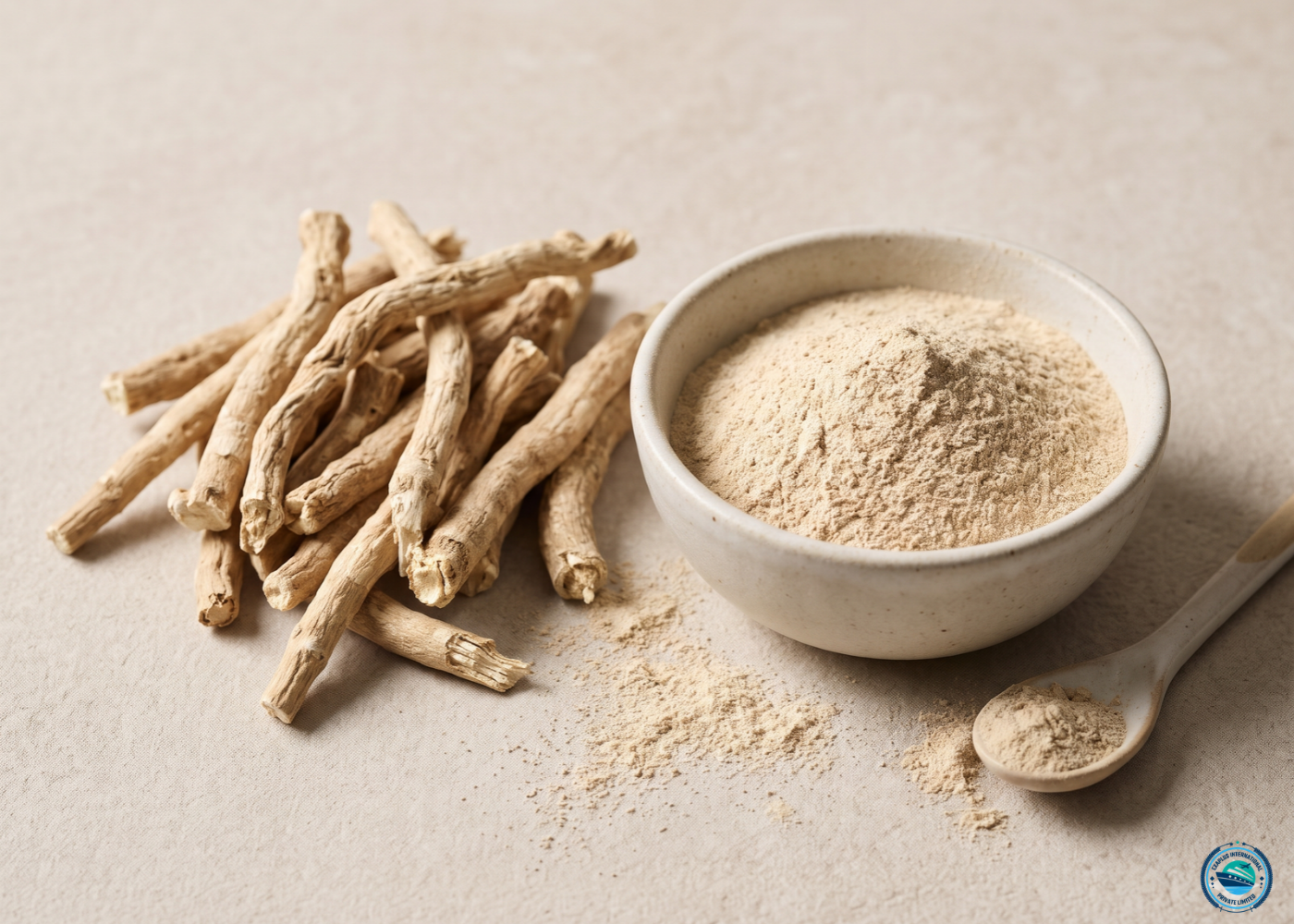
Ashwagandha Powder: What Bulk Buyers Need to Know Before Sourcing from India
Few botanicals have moved from a niche Ayurvedic ingredient to a mainstream supplement shelf as quickly as ashwagandha. It now shows up in capsules, sleep and stress blends, protein powders, gummies, functional drinks and even skincare. For brands and importers, that demand creates opportunity — and risk. Ashwagandha is a product where two lots that look identical can differ sharply in active content, purity and compliance.
This guide is written for buyers: private-label brands, importers, distributors and formulators. It covers what ashwagandha powder is, how grades differ, which tests actually matter, and what to ask a supplier before you commit to a bulk order.
What Is Ashwagandha?
Ashwagandha (Withania somnifera) is a small woody shrub in the nightshade family (Solanaceae). It is also known as Indian ginseng or winter cherry, and it grows in dry regions of India, the Middle East and parts of Africa. India is the primary commercial source, with cultivation concentrated in states such as Madhya Pradesh and Rajasthan.
In Ayurveda, ashwagandha has been used for centuries and is classed as a *rasayana* — a category of herbs traditionally used to support overall vitality.
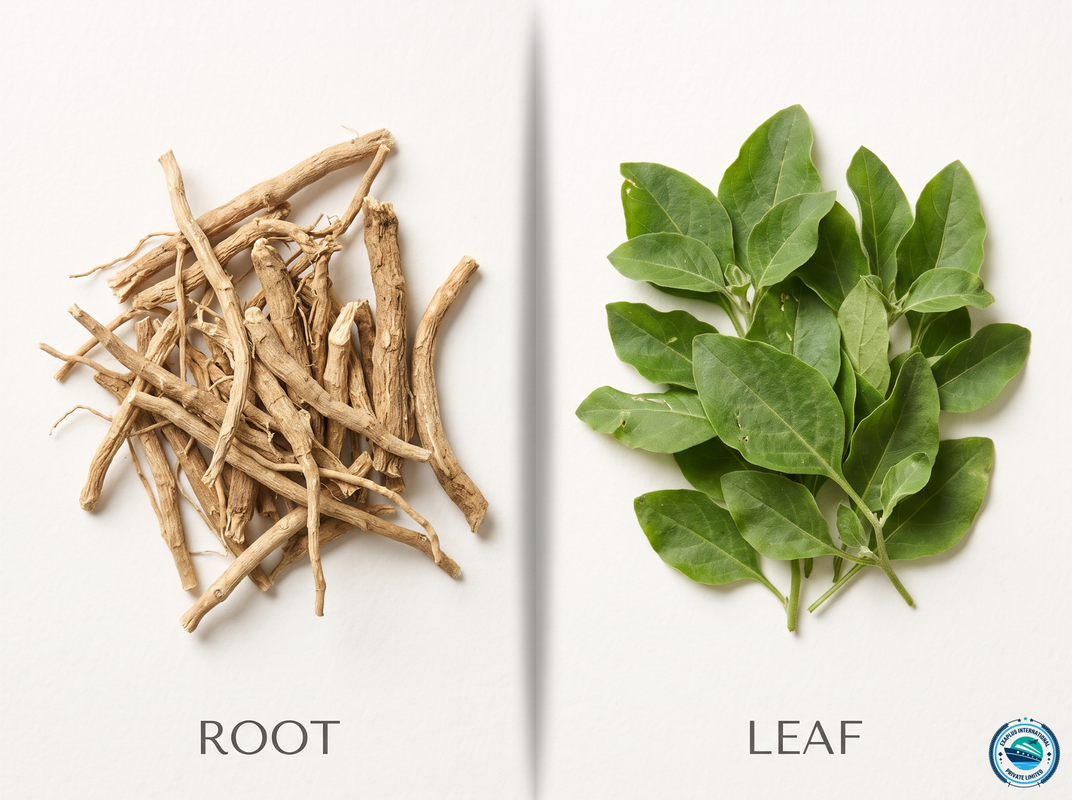
Root vs leaf: why it matters
Traditionally, the **root** is the part used. The leaves contain a different profile of compounds, and leaf material is cheaper and more plentiful. That makes leaf a common way to stretch or substitute root powder.
What’s in Ashwagandha Powder: Withanolides
The compounds buyers focus on are withanolides — a group of naturally occurring steroidal lactones. Withanolide content is the main number used to grade, standardise and price ashwagandha material.
Why withanolide % matters to you:
- It drives price. Higher standardised content costs more per kg.
- It drives label claims. If your label states a withanolide %, every lot must meet it.
Grades and Forms: Root Powder vs Standardised Extract
“Ashwagandha powder” in the trade can mean two quite different products. Be precise in your enquiry.
| Form | What it is |
|---|---|
| Root powder (whole root, milled) | Dried root ground to a defined mesh; no concentration |
| Standardised extract – 1.5% withanolides | Solvent-extracted root, standardised to 1.5% |
| Standardised extract – 2.5% withanolides | As above, standardised to 2.5% |
| Standardised extract – 5% withanolides | Higher-concentration extract |
Quality Parameters Every Buyer Should Check
A good spec sheet is your first line of defence. These are the parameters worth writing into your purchase specification.
1. Withanolide content — and the test method
Insist on HPLC (high-performance liquid chromatography). Older gravimetric or UV/spectrophotometric methods tend to report higher figures than HPLC on the same material, because they are less specific [VERIFY]. A “5%” result by one method is not the same as 5% by HPLC. Always ask: which method, which lab?
2. Plant part and identity
Confirm root-only (if that is your requirement) and ask how identity is verified — for example, by HPTLC fingerprinting or microscopy. This is also how leaf or stem adulteration is detected.
3. Moisture
Excess moisture shortens shelf life and encourages microbial growth. Agree a maximum moisture limit in your spec [VERIFY: typical limit, e.g. ≤ 8–10%].
4. Mesh size
Particle size affects flowability, encapsulation and mixing. Capsule fillers and drink-mix producers often have different requirements, so state the mesh you need [VERIFY: common mesh range, e.g. 60–80 mesh].
5. Microbiology
Total plate count, yeast and mould, E. coli, Salmonella, and other pathogens as required by your market. Root crops can carry soil-borne microbes, so this panel matters.
6. Heavy metals
Lead, cadmium, arsenic and mercury. Limits vary by market and product category — for example, supplement-specific rules in some jurisdictions are stricter than general food limits [VERIFY per market].
7. Pesticide residues
Ask for a multi-residue screen against the maximum residue limits of your destination market. EU limits in particular can be very low.
8. Aflatoxins
Relevant for any dried botanical stored in warm, humid conditions. Request total aflatoxin and aflatoxin B1 results.
9. Adulteration and fillers
Beyond leaf and stem, watch for starch or other fillers in powders, and for undeclared carriers in extracts. Identity testing and a clear, signed specification are your safeguards.
The rule of thumb: a certificate of analysis (CoA) on its own is a claim. A third-party lab report tied to the specific lot you are buying is evidence.
Applications
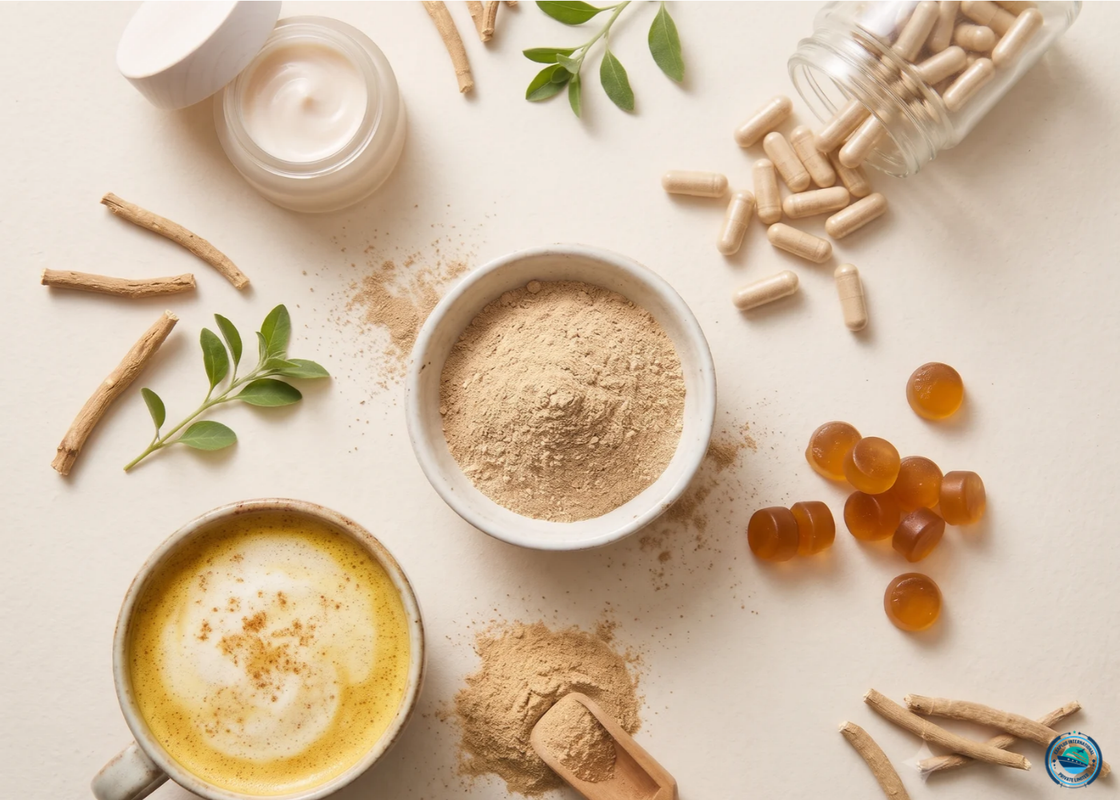
Ashwagandha powder and extracts are used across several product categories:
- Capsules and tablets — the largest format; standardised extracts allow smaller doses per unit.
- Powders and drink mixes — adaptogen lattes, “moon milk” blends, protein and sports powders.
- Gummies — need high-concentration extracts to fit an effective amount into a small piece, and careful taste masking.
- Functional foods and beverages — bars, teas and ready-to-drink formats, subject to food rules in each market.
- Cosmetics and personal care — used as a botanical ingredient in some skincare formulations.
Why Source Ashwagandha Powder from India?
India is the natural home of commercial ashwagandha cultivation and processing, which brings several advantages for buyers:
- Origin expertise — generations of cultivation and an established Ayurvedic processing ecosystem.
- Scale — a supply base able to support both small private-label runs and larger bulk volumes
- Range — root powder, multiple standardised extract grades and organic options from one origin.
- Testing infrastructure — access to accredited third-party labs for HPLC and contaminant testing.
What to ask an ashwagandha powder exporter
Before you place an order, ask for:
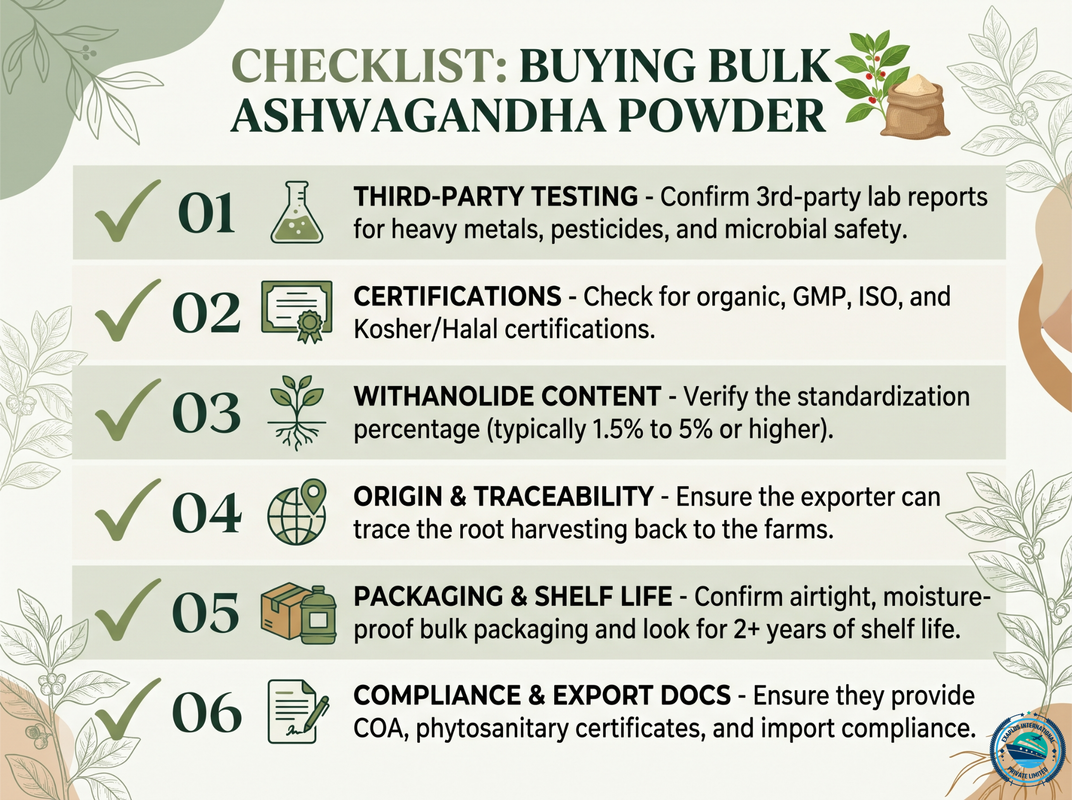
- A specification sheet covering plant part, withanolide % and method, mesh, moisture, microbiology and contaminant limits.
- A sample CoA plus a third-party lab report for a recent lot.
- Confirmation that lot-specific reports will be provided with each shipment.
- Details of the processing facility’s registrations and certifications.
- Packaging options, MOQ and lead time.
- Organic certification details, if you need organic.
Frequently Asked Questions
1. What is the difference between ashwagandha root powder and ashwagandha extract? Root powder is the dried root milled to a fine powder, with no concentration. An extract is produced by extracting the root and standardising it to a defined withanolide percentage, such as 2.5% or 5%.
2. Which test method should I insist on for withanolides? HPLC. It is more specific than older gravimetric or UV methods, which can report higher figures on the same material. Always confirm the method and the lab on the report.
3. How do I know the powder is root-only? Ask for identity testing (such as HPTLC fingerprinting or microscopy) and a written specification stating the plant part. Lot-specific third-party reports add another layer of assurance.
4. Can ashwagandha powder be sold in my country? It depends on the market, the plant part and the product format, and rules have been changing in some countries. Check current regulations with a local regulatory expert before launching.
5. Do you offer private-label packaging? Yes. Exaplus offers private-label / OEM supply with customised packaging. Share your format and quantity, and we will advise on options.
6. What documentation comes with each shipment? Third-party lab reports for each lot, along with standard export documentation. Tell us your market’s specific requirements when you enquire.