


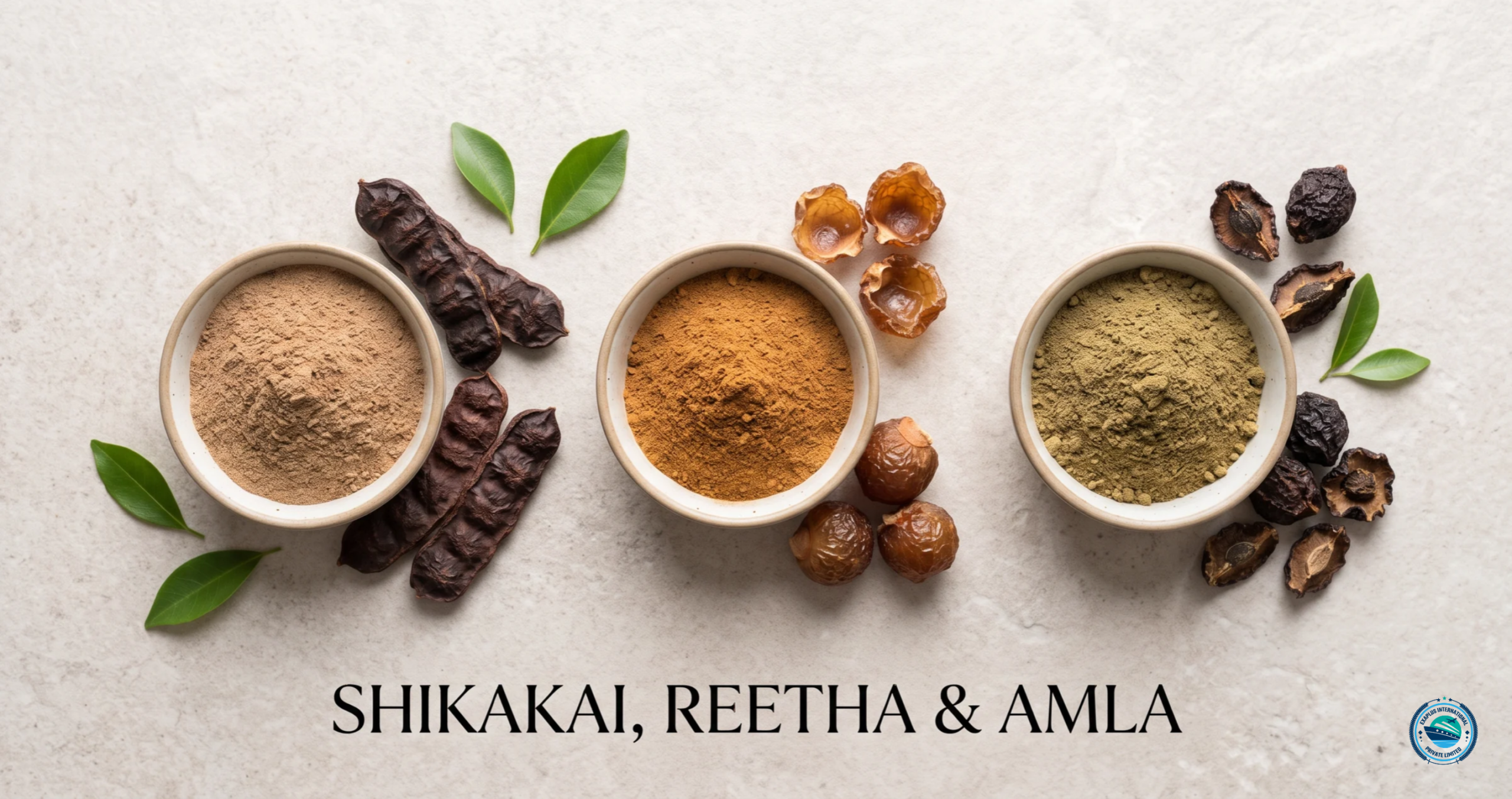
Introduction
Shikakai, reetha and amla are sold side by side, mixed in the same recipes and described in the same vague terms. So it is easy to assume they do the same job.
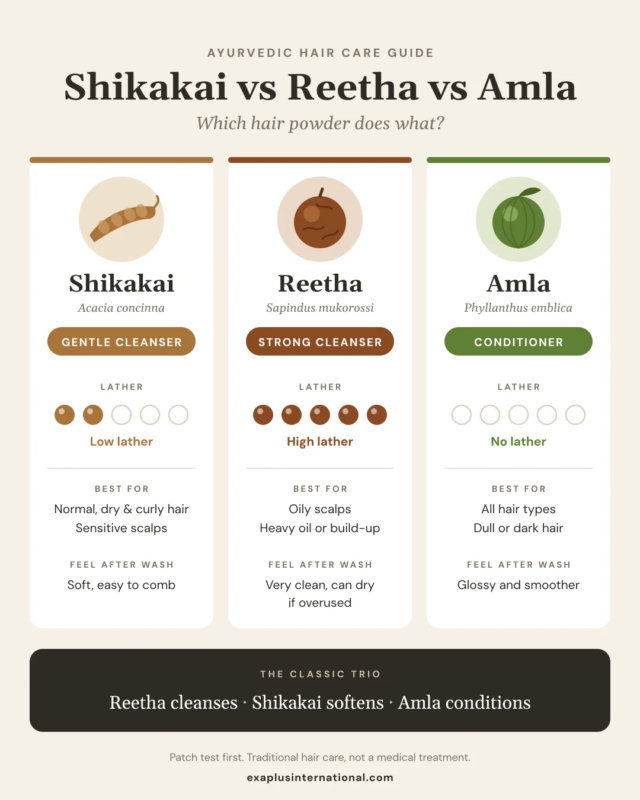
They don’t. When people compare shikakai vs reetha vs amla, the real answer is that each powder plays a different role. One cleanses gently, one cleanses strongly, and one conditions rather than cleanses at all.
This guide explains what each powder is, which hair types it suits, how to use it, and how to combine all three into a classic Ayurvedic hair wash. It also covers common mistakes and what brands should check when sourcing in bulk.
Quick answer
- Shikakai: a gentle, low-lather cleanser that is known for leaving hair soft and easy to detangle.
- Reetha (soapnut): a stronger cleanser with more natural foam, best for oily scalps and heavy build-up.
- Amla: not a cleanser. A conditioner and toner traditionally used for shine, strength and colour depth.
Shikakai (Acacia concinna): The Gentle Cleanser
What it is
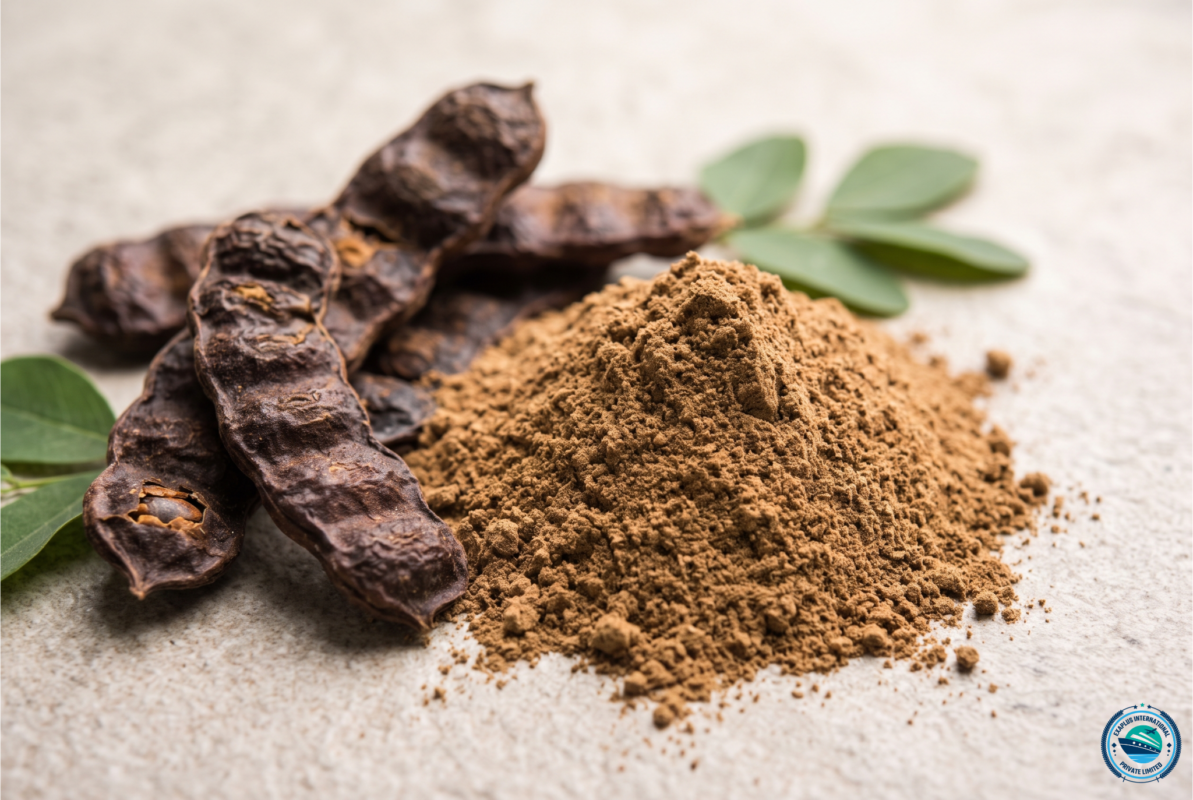
Shikakai comes from Acacia concinna, a thorny climbing shrub of the warm, dry forests of central and southern India. The name is often translated as “fruit for hair”.
The part used is the pod. The pods are harvested, sun-dried and ground into a fine, light brown powder.
Why it cleanses gently
Shikakai pods contain natural saponins, plant compounds that act a little like soap, lifting oil and dirt so water can rinse them away.
Shikakai’s saponin action is mild. It produces very little foam and does not strip the scalp as aggressively as many sulphate-based shampoos. Its mildly acidic nature is also thought to help hair feel smoother after washing.
Traditional role
In Ayurvedic and Indian household practice, shikakai has long been used as:
- A gentle cleanser for regular hair washing
- A detangling aid, because hair tends to feel softer and knot less afterwards
- A scalp care ingredient that is known for cleansing without leaving the scalp tight or dry
Who it suits best
Shikakai powder for hair works well for most hair types, but it particularly suits:
- Normal to dry hair
- Wavy, curly and long hair that tangles easily
- Sensitive scalps that react to harsh shampoos
Texture and smell
The powder is fine and slightly gritty when wet, with an earthy, faintly tangy smell. Hair will not “squeak” after washing; it should simply feel clean and soft.
How to use it
- Mix 2–3 tablespoons of shikakai powder with warm water to form a smooth, runny paste.
- Wet your hair and massage the paste into the scalp for 2–3 minutes.
- Work any remaining paste down the lengths.
- Rinse thoroughly with lukewarm water until no grit remains.
Don’t expect lather. The lack of foam does not mean it isn’t working.
Reetha / Soapnut (Sapindus mukorossi): The Stronger Cleanser
What it is
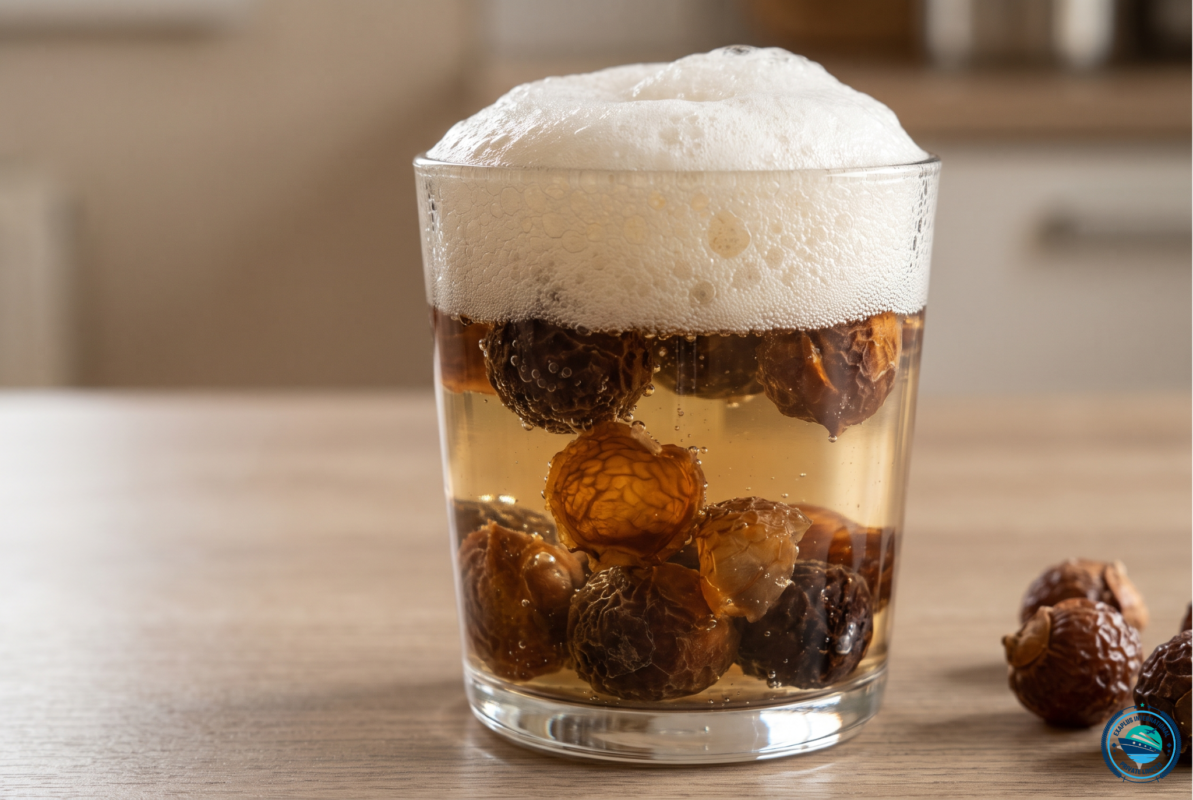
Reetha, also called soapnut or soapberry, comes from Sapindus mukorossi, a tree of northern India and the Himalayan foothills. Its wrinkled, amber-brown fruits have long been used to wash hair, clothes and fine silks.
The part used is the fruit shell (the dried outer flesh around the hard black seed). The seed is removed and the shell is dried and ground into powder.
Why it lathers more than shikakai
The fruit shell is rich in saponins, and its saponins foam much more readily than those in shikakai. Shake soapnut shells in warm water and you will see suds form within seconds.
That makes reetha the stronger cleanser of the three. It cuts through oil and build-up more effectively and gives the “proper wash” feeling many people miss after leaving regular shampoo.
Reetha powder benefits
Traditionally, reetha powder benefits include deeper cleansing for oily scalps, removing hair oil after a pre-wash oil massage, and lifting styling-product build-up.
Who should use less of it
Because reetha cleanses more strongly, it can leave dry, curly, coily or chemically treated hair feeling rough or brittle if used alone or too often. If your hair is on the dry side:
- Use reetha in small amounts, blended with shikakai
- Avoid using it on its own more than once a week
- Always follow with a conditioning step
How to use it
Soapnut powder can be used as a paste, but it works best as a liquid:
- Soak 1 tablespoon of reetha powder (or 4–5 whole soapnut shells) in 1 cup of hot water for a few hours or overnight.
- Boil for 10 minutes, let it cool and strain.
- Pour the liquid over wet hair, massage into the scalp and rinse well.
Keep it out of your eyes. Reetha stings sharply. Tilt your head back while rinsing and keep clean water nearby.
Amla / Indian Gooseberry (Phyllanthus emblica): The Conditioner and Toner
What it is
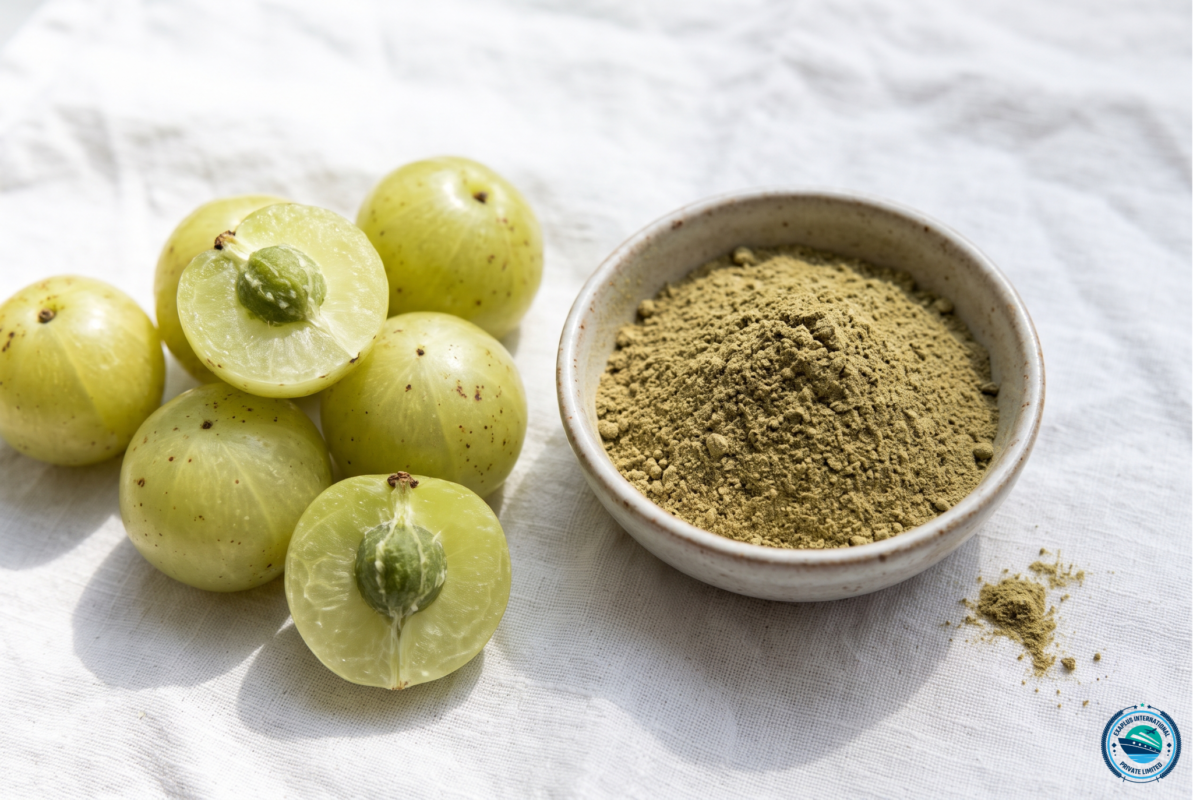
Amla, or Indian gooseberry, is the small, pale green fruit of Phyllanthus emblica (also listed as Emblica officinalis). It is one of Ayurveda’s most respected fruits, used in foods, tonics such as chyawanprash, and hair care.
For hair use, the fruit is deseeded, dried and ground into a fine, greenish-brown powder.
Why it conditions rather than cleanses
This is the most common point of confusion. Amla has no meaningful saponin content, so it does not foam or lift oil the way shikakai and reetha do.
Instead, amla works as a conditioner and toner. It is naturally rich in tannins, plant compounds with a mildly astringent effect, and it is slightly acidic. Together, these properties are associated with smoothing the hair surface, which may help hair look shinier and feel stronger after a wash.
Traditional associations
Amla powder for hair has long been associated with:
- Shine: hair often looks glossier after an amla rinse or pack
- Strength: it is known for making hair feel thicker and less prone to breakage
- Colour depth: it enriches dark tones and is a common addition to henna mixes
Amla is also well known as a natural source of vitamin C and antioxidants. Some early research has explored amla extracts for hair care, but it is best seen as a traditional conditioner, not a treatment.
How to use it
As a hair pack:
- Mix 2–3 tablespoons of amla powder with water, aloe vera gel or yoghurt to form a paste.
- Apply to the scalp and lengths and leave for 20–30 minutes.
- Rinse thoroughly.
As a rinse:
- Steep 1–2 tablespoons of amla powder in 2 cups of hot water for 30 minutes.
- Strain and pour over freshly washed hair as a final rinse.
Shikakai vs Reetha vs Amla: Side-by-Side Comparison
| Powder | Botanical name | Main role | Lather level | Best for hair type | Feel after wash | Typical use |
| Shikakai | Acacia concinna | Gentle cleanser, detangler | Low | Normal, dry, wavy, curly, sensitive scalp | Soft, smooth, easy to comb | Paste or decoction, 1–3 times a week |
| Reetha (soapnut) | Sapindus mukorossi | Stronger cleanser | Medium to high | Oily scalp, heavy oil or product build-up | Very clean, can feel dry if overused | Soaked liquid or blended into a wash |
| Amla | Phyllanthus emblica | Conditioner and toner | None | All types, especially dull or dark hair | Glossy, firmer, smoother | Pack, rinse or added to a wash blend |
Buyer’s Corner: Sourcing Shikakai, Reetha and Amla in Bulk
For cosmetic brands, formulators and importers, quality varies widely between suppliers. Before you commit to a supplier, check:
- Mesh size: Fine, consistent particle size (commonly specified by mesh) matters for smooth pastes and for blending into finished products.
- Moisture content: Low moisture helps prevent clumping, mould and shelf-life problems.
- Ash content: Total and acid-insoluble ash can indicate sand, soil or other inorganic contamination.
- Purity and adulteration: Ask how the material is identified and checked for fillers, starch or substituted plant parts.
- Lab reports: Request microbial testing (total plate count, yeast and mould, pathogens) and heavy-metal testing (lead, arsenic, cadmium, mercury) for each lot.
- Packaging: Food-grade, moisture-barrier packaging with clear batch labelling protects quality in transit.
Common bulk and private-label applications:
- Herbal and “no-sulphate” shampoos and cleansers
- Hair packs, masks and pre-wash treatments
- Ready-to-use powder blends for an Ayurvedic hair wash
- Henna and herbal colour blends (especially amla)
Frequently Asked Questions
Can I use shikakai daily?
Shikakai is the gentlest of the three, and many people with oily scalps use it daily. For most hair types, 2–4 times a week is enough. If hair feels dry, wash less often or add amla.
Does amla cause grey hair to darken?
Amla is traditionally associated with richer, darker-looking hair, and regular use may slightly deepen the tone of grey or light hair. It is not a hair dye and will not reliably cover greys. For fuller colour, people usually combine it with henna or indigo.
Is reetha safe for colour-treated hair?
Reetha can be used on colour-treated hair, but its stronger cleansing may fade colour faster. Use it sparingly, blend it with shikakai, and do a strand test first.
Can I mix all three?
Yes. Shikakai, reetha and amla are traditionally combined, and the trio is the most common Ayurvedic hair wash. Adjust the ratio to your scalp: more reetha for oily hair, less for dry hair.
Will these powders stop hair fall or dandruff?
No herbal powder can be promised to cure hair fall, dandruff or any scalp condition. These powders are known for gentle cleansing and conditioning in traditional practice. For persistent hair fall or dandruff, consult a dermatologist.
Conclusion
The shikakai vs reetha vs amla question has a clear answer once you know their roles. Shikakai cleanses gently, reetha cleanses strongly with natural lather, and amla conditions and adds shine. Used alone, each has a place. Combined in the right ratio, they make a complete, plant-based hair wash.
Exaplus International supplies shikakai, reetha and amla powders through partner processing units, in bulk and for private label. Brands and importers can contact us at info@exaplusinternational.com for bulk or private-label supply.