


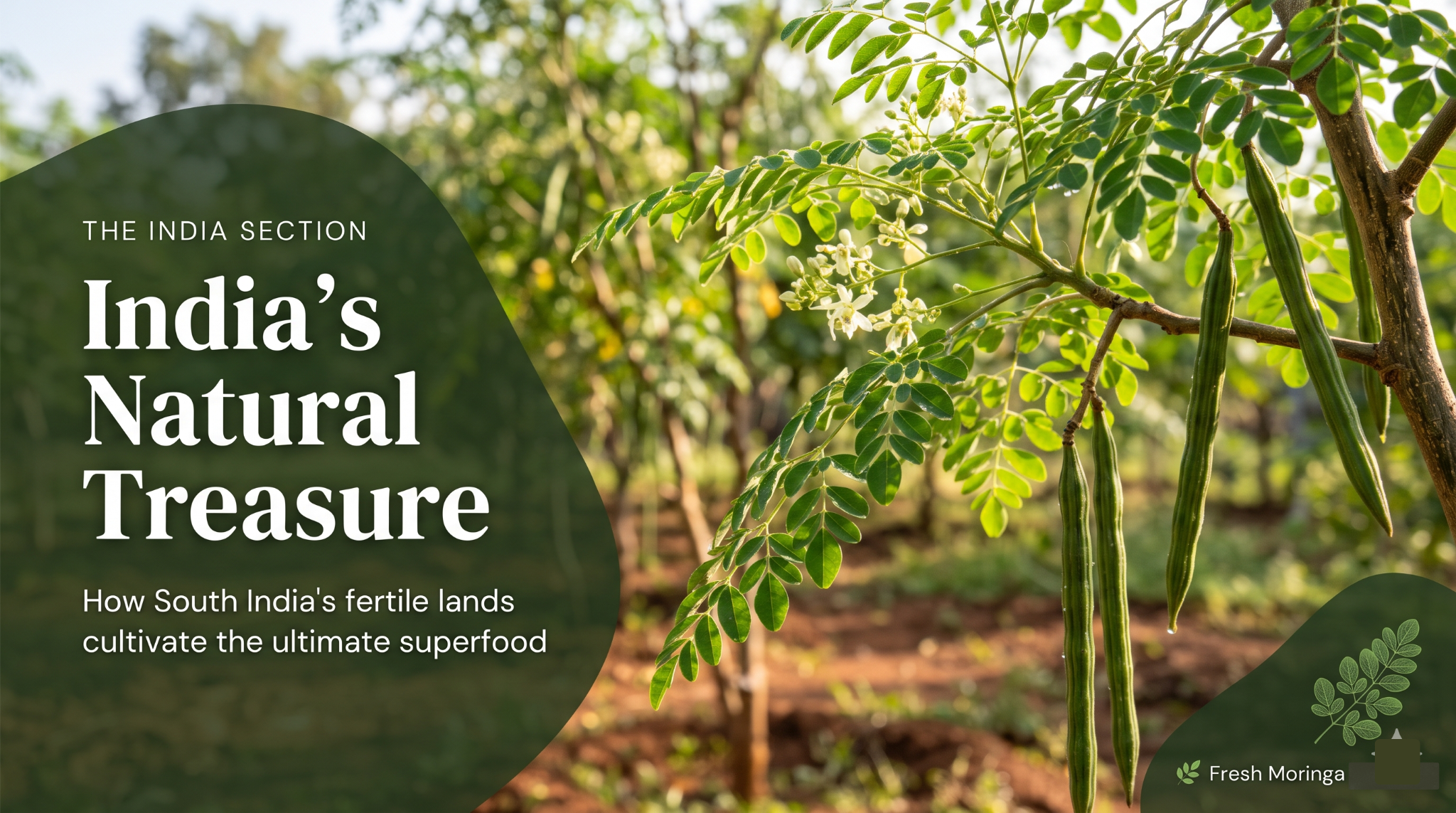
India’s place in global moringa
Moringa (Moringa oleifera), the “drumstick tree”, is native to India. Indian households have cooked its pods and leaves for generations, long before moringa became a superfood ingredient in Western markets.
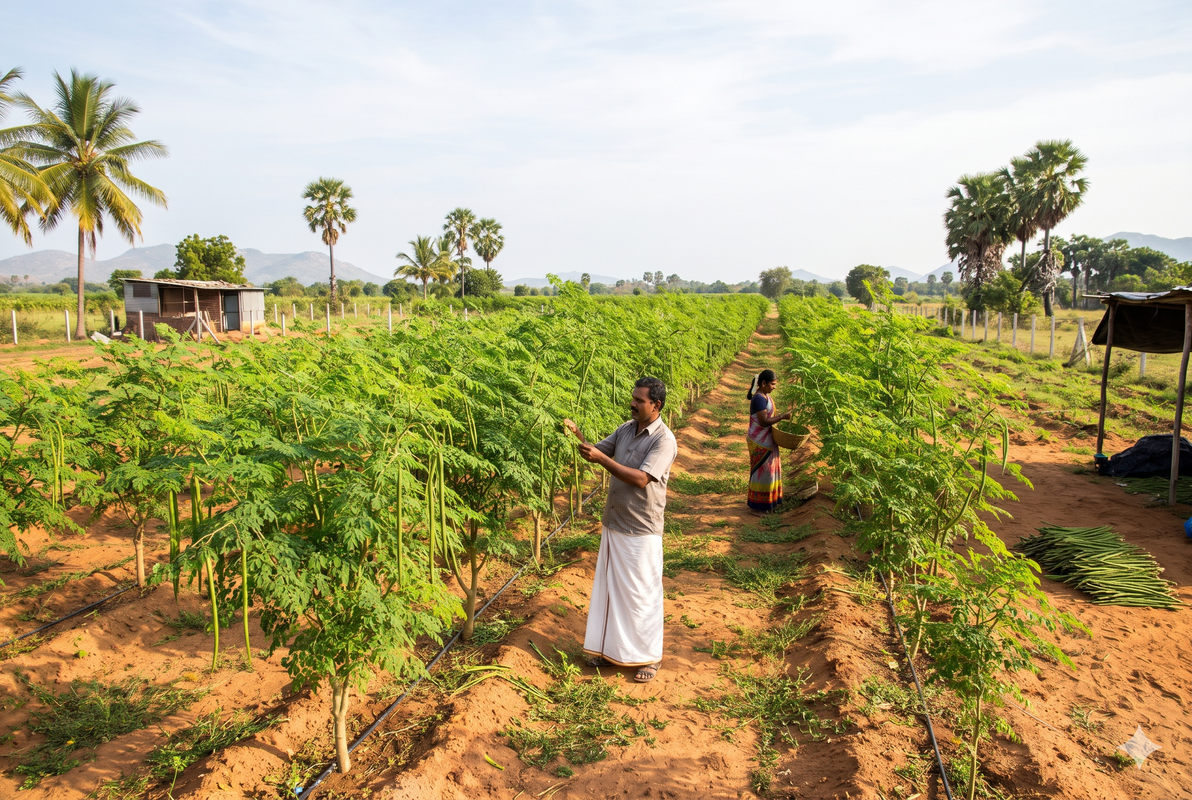
Where it grows
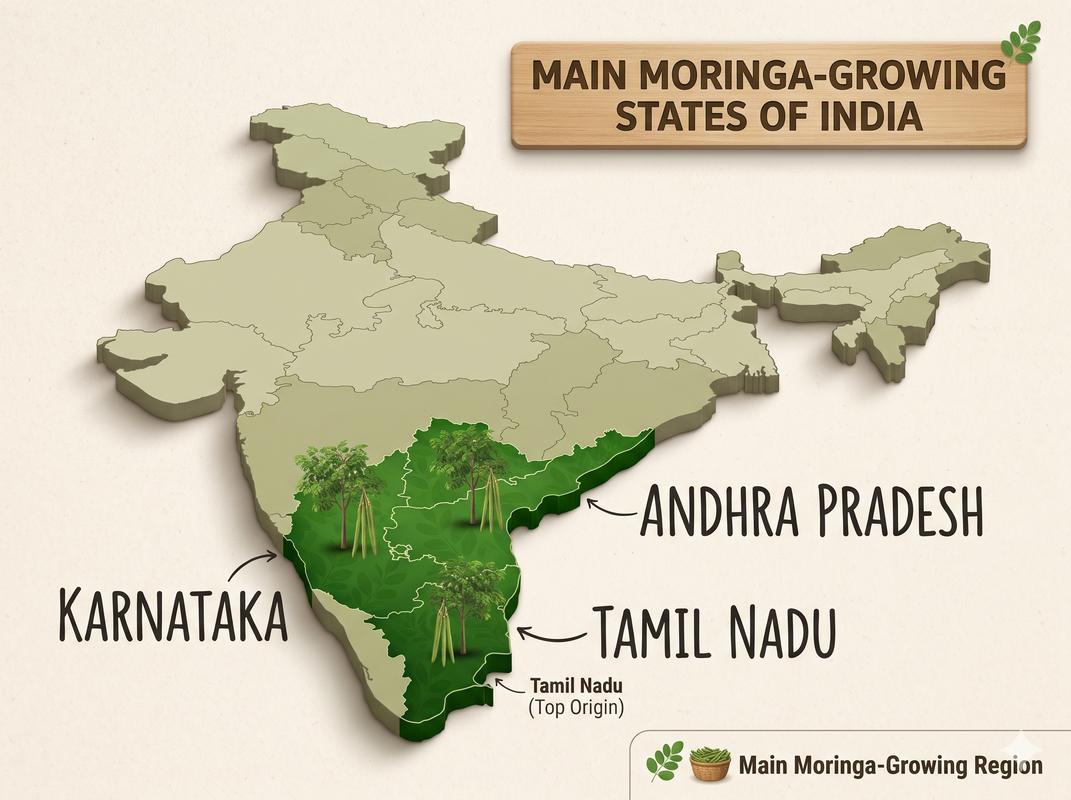
Commercial cultivation is concentrated in the south:
- Tamil Nadu: the leading state.
- Andhra Pradesh and Karnataka: major growing and processing regions.
- Smaller but growing areas in states such as Gujarat and Odisha.
Moringa grows best at roughly 25–35°C and tolerates drought and poor soil. Southern India’s warm climate allows growth for most of the year.
Sourcing explained: from farm to export carton
What buyers purchase
| Form | Typical use |
| Moringa leaf powder | Supplements, smoothie blends, food fortification |
| Dried leaf / TBC (tea bag cut) | Herbal teas, infusions |
| Capsule-grade fine powder | Nutraceutical capsules and tablets |
| Moringa seeds | Oil extraction, planting |
| Moringa seed oil | Cosmetics and personal care |
| Organic vs conventional | Organic needs certified farms and a full certificate chain |
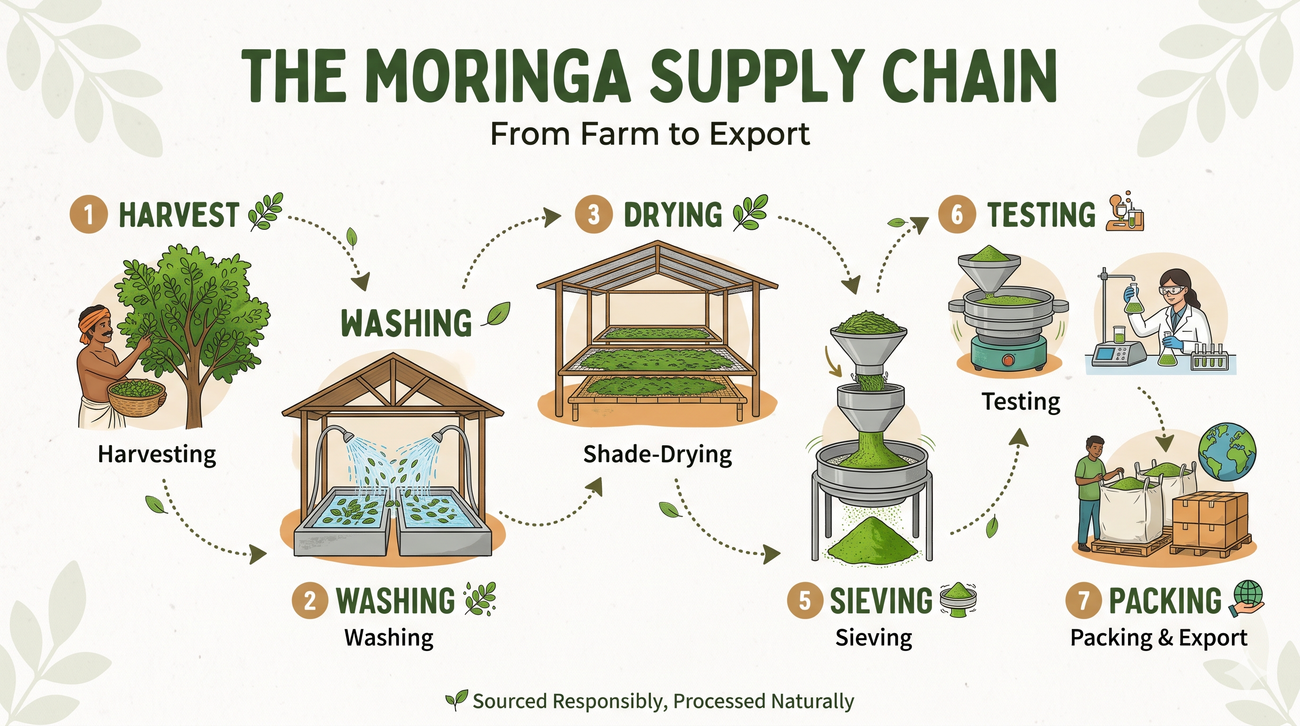
The supply chain
- Cultivation: dense leaf plantings, often with irrigation.
- Harvest: branches cut back at a set height so the tree regrows.
- Washing: removes soil, dust and foreign matter.
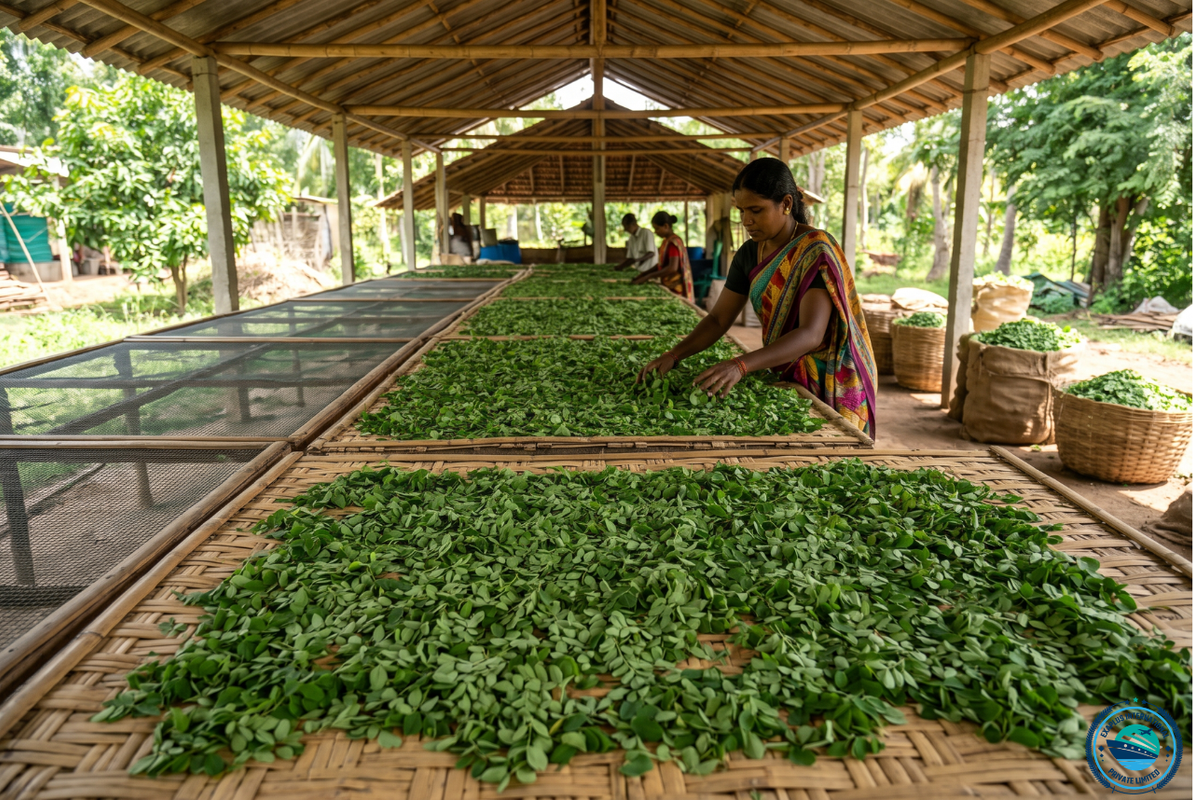
- Drying: shade drying or low-temperature mechanical drying. This step decides colour and nutrient retention.
- Destemming and milling: leaves separated from stems, then ground.
- Sieving: to a specified mesh size.
- Microbial reduction: steam sterilisation or another approved method, where the spec requires it.
- Testing and packing: lot coding, lab testing, and moisture-proof packaging.
What affects quality
- Colour: bright green means good drying; brown or olive suggests heat damage or old stock.
- Mesh size: must match your application (capsules need finer powder than teas).
- Moisture: high moisture shortens shelf life and invites microbial growth.
- Microbial load: depends on hygiene, drying and treatment.
- Stem content: more stem means lower quality and a duller colour.
Seasons and harvest cycles
Moringa is not a once-a-year crop. That is its biggest advantage for supply planning.
After planting, the first harvest usually comes around six months later. After that, the tree is cut back and regrows. Agronomy trials in India show leaf crops being cut roughly every 45–60 days in the growing season. Pod crops are ratooned and harvested again after 4–5 months, for up to about three years.
The weather still shapes both how much leaf there is and how good it is:
- Summer heat (March–May): dry air is ideal for drying, but heat stress can slow leaf growth without irrigation.
- Monsoon (roughly June–September; October–December in parts of Tamil Nadu): rain drives strong regrowth, but humidity makes drying harder and raises microbial risk.
- Winter (December–February): growth slows in cooler regions; in southern India, cool, dry weather often gives good drying conditions.
An approximate harvest and quality calendar (South India)
| Months | Leaf availability | Drying conditions | Buyer note |
| Jan–Feb | Steady | Good (cool, dry) | Strong window for colour and quality |
| Mar–May | Moderate (higher with irrigation) | Very good (hot, dry) | Good time to book stock |
| Jun–Sep | High regrowth | Difficult (humid, wet) | Check moisture and micro results closely |
| Oct–Dec | Variable | Mixed (NE monsoon rain in Tamil Nadu) | Plan buffer stock ahead of this period |
How to de-risk your moringa supply
Use this checklist before you commit to a supplier:
- ☐ Lot-wise COA for every shipment, not a generic spec sheet
- ☐ Third-party lab reports from an accredited lab, covering:
- heavy metals (lead, arsenic, cadmium, mercury)
- pesticide residues, tested against your destination market’s limits
- microbiology (TPC, yeast and mould, E. coli, Salmonella)
- aflatoxin
- ethylene oxide (ETO), where your market requires it
- ☐ Organic certificates (and transaction certificates), if you sell organic
- ☐ Forward contracts and buffer stock: agree volumes and delivery schedules for the full year
- ☐ Sample-to-bulk matching: each shipment checked against the approved reference sample
- ☐ Packaging and shelf life: moisture-barrier liners, nitrogen flushing if needed, and an agreed best-before period
- ☐ Exporter registrations: confirm FSSAI and APEDA registration, plus the processing unit’s food-safety certification
Frequently asked questions
When is the best time to buy moringa from India?
Moringa is harvested several times a year, so you can buy year-round. The dry months (roughly January to May in southern India) usually give the best drying conditions. Many brands book annual contracts so stock processed in the dry season covers the monsoon months.
What is the shelf life of moringa powder?
Shelf life depends on moisture, packaging and storage. Well-dried powder in moisture-barrier packaging, stored cool and dry, commonly carries a best-before of around 12–24 months. Confirm the exact period with your supplier’s stability data.
Can I get private-label moringa powder from India?
Yes. Many Indian exporters, including Exaplus, offer private-label and OEM packing with your brand’s packaging and labelling.
What lab tests should moringa powder have for export?
At minimum: heavy metals, pesticide residues, microbiology, aflatoxin and moisture. Some markets also require ETO testing. Ask for third-party reports for each lot.
Is Indian moringa available as organic?
Organic moringa is available from certified farms in India. Ask for the organic certificate and the transaction certificate for each shipment.