






Jaggery, a natural and traditional sweetener, has been a part of Indian culture for centuries. Known for its rich flavor, nutritional benefits, and versatile uses, it is gaining global recognition as a healthier alternative to refined sugar. India, being one of the largest producers of jaggery, has emerged as a key exporter, catering to the growing demand worldwide.
In this blog, we will explore the significance of Indian jaggery in global markets, the benefits of choosing natural jaggery over refined sugar, and how reliable exporters ensure high-quality products reach international consumers.
The Growing Demand for Indian Jaggery
With increasing awareness of health and wellness, consumers worldwide are shifting towards natural and organic food products. Jaggery has gained popularity due to its unrefined nature, rich mineral content, and numerous health benefits. Countries across Asia, Europe, the Middle East, and North America are importing Indian jaggery in various forms, including solid blocks, powder, and liquid jaggery.
India’s jaggery industry benefits from:
- A favorable climate for sugarcane cultivation.
- Traditional expertise in jaggery production.
- The availability of organic and chemical-free jaggery options.
- Efficient export channels ensuring global reach.
Why Choose Indian Jaggery?
India is renowned for producing high-quality jaggery using traditional methods that retain its nutritional value and natural sweetness. Some key reasons why Indian jaggery is favored globally include:
1. Purity and Authenticity
Indian jaggery is made using age-old techniques, ensuring that it remains free from artificial chemicals, preservatives, and additives. The production process involves extracting fresh sugarcane juice, boiling it to remove impurities, and naturally solidifying it without the use of synthetic agents.
2. Rich in Nutrients
Unlike refined sugar, which offers empty calories, jaggery is packed with essential minerals such as iron, calcium, magnesium, and potassium. This makes it a nutritious alternative for people looking to enhance their diets with natural ingredients.
3. Health Benefits
Jaggery is known for its various health benefits, including:
- Boosting immunity.
- Aiding digestion and detoxifying the liver.
- Improving hemoglobin levels and preventing anemia.
- Regulating blood pressure and maintaining electrolyte balance.
4. Eco-Friendly Production
Many Indian jaggery manufacturers focus on sustainable and eco-friendly production methods. Since jaggery is made without extensive processing, it has a lower environmental footprint compared to refined sugar.
Forms of Jaggery Exported from India
To cater to different market needs, jaggery is available in various forms:
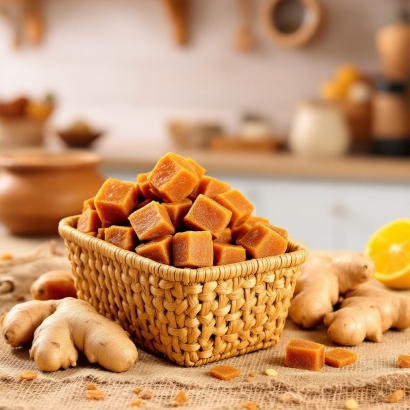
- Jaggery Blocks: Traditional solid form, ideal for cooking and making sweets.
- Jaggery Powder: A convenient alternative for easy mixing in beverages and recipes.
- Liquid Jaggery: Used in syrups, sauces, and bakery products.
- Flavored Jaggery: Infused with herbs, spices, or dry fruits to enhance taste and nutritional value.
Quality Standards for Jaggery Exports
Exporting jaggery requires strict adherence to international quality and safety standards. Indian jaggery exporters ensure:
- Organic Certification: Compliance with global organic food standards.
- Hygienic Processing: Maintaining cleanliness and preventing contamination during production.
- Laboratory Testing: Checking for purity, moisture content, and absence of chemical residues.
- Proper Packaging: Ensuring freshness and extended shelf life with air-tight, eco-friendly packaging.
Key Export Markets for Indian Jaggery
Indian jaggery has a strong presence in several international markets:
- Middle East: Countries like UAE, Saudi Arabia, and Oman have a high demand for Indian jaggery due to its natural sweetness and energy-boosting properties.
- Europe: Organic food enthusiasts in Germany, France, and the UK are adopting jaggery as a healthier alternative to refined sugar.
- North America: Health-conscious consumers in the USA and Canada are increasingly using jaggery in traditional and modern recipes.
- Asia: Nations such as Japan, South Korea, and Malaysia incorporate jaggery into their traditional dishes and herbal drinks.
Challenges in Jaggery Export and How to Overcome Them
Despite the growing demand, the jaggery export industry faces certain challenges:
- Moisture Content Management: Proper drying and packaging techniques help maintain shelf stability.
- Customs and Regulations: Adhering to different country-specific food regulations ensures smooth exports.
- Market Awareness: Educating international consumers about jaggery’s benefits helps increase demand and acceptance.
How to Source High-Quality Jaggery from India
For international buyers, selecting a reliable jaggery exporter is crucial. Consider the following factors when choosing a supplier:
- Certifications: Ensure the supplier has necessary food safety and organic certifications.
- Product Variety: Look for exporters offering different forms of jaggery.
- Supply Chain Efficiency: Check the exporter’s ability to handle bulk orders with timely delivery.
- Customer Reviews: Research past clients’ feedback on quality and service.